
HVAC Basics for Homeowners

Many homeowners aren’t familiar with HVAC terminology, but having a foundational understanding can help you feel in control of your home comfort. Making educated and informed decisions regarding your home’s HVAC system’s features, energy efficiency, and long-term value can significantly enhance your overall satisfaction and indoor comfort.
Abbreviations to Know
• AFUE (Annual Fuel Utilization Efficiency): A measure of a furnace’s efficiency, calculated by dividing the heat output by the total fuel input. Higher AFUE ratings indicate greater energy efficiency.
• BTU (British Thermal Unit): A measurement of the amount of heat required to raise or lower the temperature of one pound of water by one degree Fahrenheit.
• DC (Direct Current): A type of electrical current that only flows in one direction, used to power inverter compressors.
• EER2 (Energy Efficiency Ratio): Measures how efficiently an HVAC system cools a space at a fixed outside temperature (95°F) under the updated 2023 testing procedures. It complements SEER2 (Seasonal Energy Efficiency Ratio 2), which measures seasonal performance.
• HSPF2 (Heating Performance Factor): A measurement of a heat pump’s efficiency over an entire heating season under the updated 2023 testing procedures.
• HVAC: Heating, ventilation, and air conditioning.
• SEER2 (Seasonal Energy Efficiency Ratio): A measure of cooling efficiency over a typical cooling season divided by the total electric energy input during the same period under the updated 2023 testing procedures.
HVAC Products, Components, and Functions
• Air Conditioner: Cools indoor spaces by removing heat and humidity from a home, maintaining a comfortable indoor environment during hot weather.
• Capacity: HVAC capacity is the output produced by the heating or cooling unit
• Condenser Coil: The part of the air conditioner or heat pump that's located in the outdoor unit. Its job is to release the heat your system pulls from inside your home, so the air stays cool and comfortable indoors.
• Compressor: A pump that increases the pressure of refrigerant gas.
• Ductless System: Also known as a mini-split, this type of system consists of an outdoor unit connected to one or more individual room units. It provides targeted heating and cooling without the need for ductwork.
• Evaporator Coil: The indoor component of an air conditioning or heat pump system that is designed to absorb heat to change the liquid refrigerant that flows through it into a vapor, initiating the cooling process.
• Gas Furnace: The central part of a heating system that burns natural gas or propane to produce warm air, which is then distributed through a network of ductwork.
• Heat Pump: Provides both heating and cooling by transferring heat between the indoor and outdoor environments. To warm up a house, a heat pump uses the heat energy from cold outside air and draws it inside your home.
• Inverter Technology: Enables HVAC systems to operate at various speeds, adjusting to a home’s heating and/or cooling needs. This technology is similar to a car adjusting to driving conditions - slowly decreasing or increasing speed on a highway rather than entirely stopping and starting in city driving.
• Package Unit: A heating and cooling system that has the main HVAC components built into one outdoor unit, so there's no need for a separate indoor unit.
• Refrigerant: The compound (working fluid) used in air conditioners and heat pumps to transfer heat into or out of an interior space.
• Single-Speed: A single-speed motor runs at 100% speed until it reaches your desired temperature setting, then shuts off. At start-up, this motor type consumes more energy than 2-stage or inverter technology.
• Split System: An outdoor unit combined with an indoor unit, generally available in multiple efficiency and configuration options.
• Ventilation: The flow of fresh air into your home and stale air out.
Like what you see? Share with a friend.
In this article
Connect on Social Media
 Follow on Facebook
 Follow on YouTube
 Follow on Instagram
 Follow on X
 Follow on TikTok
 Follow on Pinterest

Looking for help now?
Enter your zip code to search for Daikin Contractors in your area.
Learn More
Learning Center Content
Stay informed about home comfort technology, when to upgrade, energy efficiency, and reducing your energy bills.

Cold Climate Heat Pumps: Efficient Heating in Freezing Temps
3 Nov 2025
For homes in northern states or Canada, cold winters can raise questions about whether a heat pump can provide sufficient heating. A unit rated only for mild conditions may struggle or switch to backup electric heat in cold and icy conditions. Modern technology has addressed these concerns, and select cold-climate heat pumps are designed specifically for low-temperature locations.

Can Humidity Control Help You Stay Comfortable at Higher Thermostat Settings?
29 Jul 2026
Think your thermostat tells the whole comfort story? Humidity can change how warm or cool a home feels, and too much moisture in the air may make even moderate temperatures feel muggy or uncomfortable for some occupants.
How Inverter HVAC Systems Are Designed to Impact Your Energy Bills
8 Jul 2026
Understanding your home’s energy use can start with learning about your HVAC system’s efficiency and the technology behind it. Inverter technology offers an efficient way to heat and cool your home, helping to maximize your comfort while managing energy use. This article explains how inverter systems work and how they are designed to affect your monthly energy costs.
Rising Electricity Rates: How Smart HVAC Choices Can Help Homeowners
27 May 2026
For homeowners concerned about rising electricity rates, heating and cooling efficiency is one of the most practical ways to manage long‑term energy costs, especially as the power grid faces increasing demand.
Air-to-Water Heat Pumps: The Water Home Comfort Solution Explained
17 Apr 2026
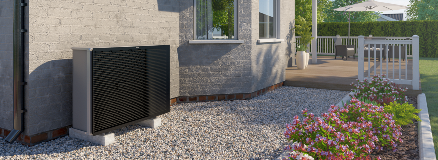
Considering replacing your fossil-fuel boiler with something new? Tired of maintaining a separate boiler, AC unit, and water heater? Air-to-water heat pumps are a modern, 3-in-1 answer to your total home comfort.